Colombia from North to South by Bus: A Personal Travel Journey
Is Colombia safe? Is it worth visiting? After nearly two years by bus, the answers unfold through rhythm, mountains, coffee hills, and the Caribbean sea.
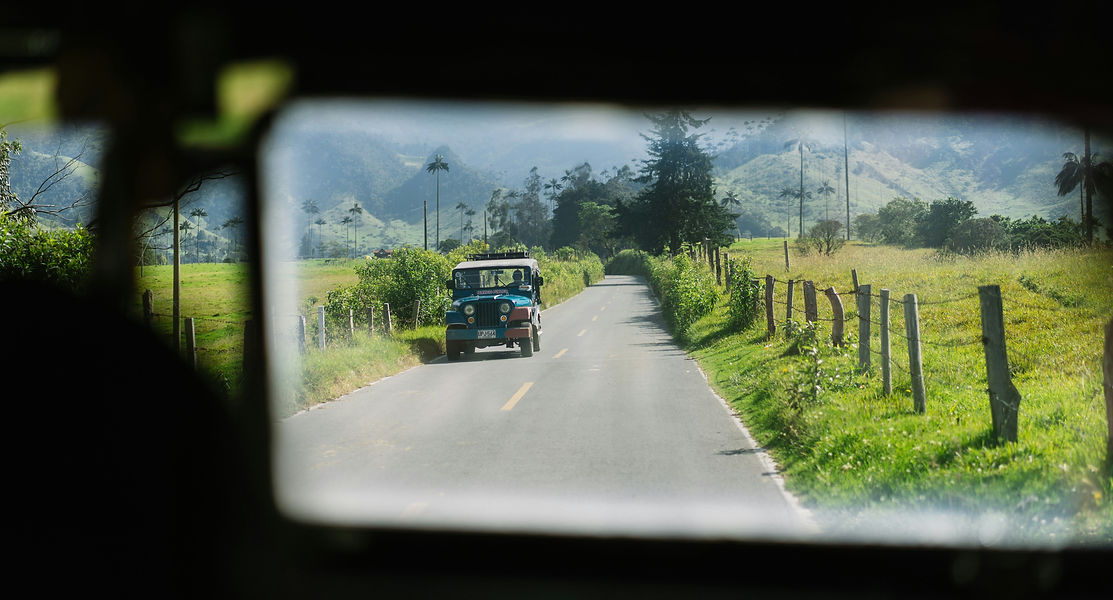
Eje Cafetero from a car window | Photo by Dan Gold
by Sylvia Marie
14 de dic de 2025
I stepped out of the plane and into the weighted blanket of Medellín’s damp eternal spring climate, feeling a bit feverish—maybe from the complications with my ticket before the flight, or maybe because I was here surprising my boyfriend. Apart from the few things he had told me about his city, I didn’t know much about Medellín—no, I hadn’t seen the Netflix series Narcos—and as always, I had no expectations of the place.
In the broken Spanish I had picked up during my three months in Sevilla, I arranged to meet his mom at the airport. “Be very careful,” she told me, “I will meet you there inside the airport, wait for me.” Coming from a native local, these words made me a little worried. I wondered, is Colombia safe to travel to?
A lady with red hair, white eyeliner, and an energy as vibrant as her outfit called my name as I was heading toward the exit.
-Nancy?
-Hola Sylvia, soy Nancy, como estás?
She spoke a lot and seemed more excited than I was to be there. She said her car broke down just as she arrived and that we had to wait for someone to pick us up.
I sat in the back seat and starred out the window as we drove through this lively and crammed Latin American city where the locals take up sidewalk real estate and live their day-to-day out in the open: interactive and loud, car horns in constant dialogue, reggaeton music blaring, merchants hustling, food and juice stands populating every street corner: I was no longer in Western Europe.
We arrived at a little restaurant, the upstairs decorated with colorful craft paper garlands, balloons, and a welcome sign with my name on it. She told me to hide, that Santi was coming soon.
Reunited at last.

Comuna 13 in Medellín | Photo by Carlos Martinez
Medellín
We ventured to the bustling city center and the density of it all was overwhelming to a gringa like me. Endless shops of cheap, fast fashion, salespeople insistently trying to reel you in, produce stands with fruits I'd never seen before, and moms with their children selling watered-down coffee from thermoses. The underlying tone was loud and clear: hustle.
We spent the day walking, tasting, and observing the somehow seamless choreography of this hectic place. We ate juicy, sour mamoncillos, bright and starchy chontaduros, and greasy arepas de choclo with cheese. All new flavors that my salivary glands immediately agreed with. I learned that the coffee in Colombia was not the fairtrade aromatic roast Westerners get at their local hipster cafes. Instead, they drink tinto, soluble Nestlé coffee powder served in plastic cups while exporting the good stuff abroad.
In Envigado or El Poblado, the pace is slightly softer and the locals slightly wealthier. These areas are where tourists go for the nicer attractions, cleaner streets, and diversity in food and choices. It’s also where you might be able to find a cup of the good stuff.
After a few months in Medellín, we started to tour this diverse and lively country, from North to South, mostly by bus. I got to see so many beautiful places and experience all the colors of Colombia over the next years, and these are a few of the places that stood out for me:
Jericó
We left the overwhelming chaos of the city and drove three hours past little towns, towering mountains, and endless stretches of tropical foliage. Arriving in a small colonial town with bright-colored buildings and cobbled streets was a gorgeously striking contrast to the lush green density of the Andes.
We slept in one of the rooms at the Bomarzo cultural center, and adored the vibe of this artsy nook amidst it all.
To me, Jericó has the sweet rhythm of pasillo music: nostalgic, gentle, and colorful.
After our short visit in Jericó, we drove back to Medallo—as the locals call it—and traded our rental car for a one-way ticket to the sea.
Taganga
Off the freezing bus and into the sun-kissed beach town on the Caribbean Sea. Fried fish and plantains served along perfumed coconut rice, sandy roads, and trash littering the grounds. From our balcony, we watched cats and goats casually passing by, and plastic trash being led by the strong winds.
We spent most days marinating in the warm waters of the Caribbean Sea and a couple of days picking up heaps of garbage on the sandy shorelines. As they watched us going around with our large black trash bag, some locals got inspired and brought us handfuls of plastic litter to dispose of, with warm smiles of approval.
Cali
If cities were people, Cali would be the bright-smiled charmer of Colombia. Sly yet familial, outgoing and always ready to have a good time. Despite my unfortunate introduction to the Salsa Capital, I fell in love with this city and kept going back for more.
From the bus station, we took a taxi to our rental. Little did we know: it didn't exist. But that's another story you could read here.
First evening in town and we fall upon a crowd dancing Salsa, taking up a whole section of the pedestrian path. It wasn’t a festive holiday or anything, just a regular day in Cali. We rented a place in Peñon for the month, enjoying the diversity in food, sitting in quiet little squares, and aimlessly walking around the third-largest city in Colombia.
The streets brim with a vivacious rhythm and boisterous flair in Cali, unlike anywhere else in the country—in my opinion.
After just over a month in Cali, we felt the need to slow down, reconnect with nature, and get lost in a more grounded part of the country. Next stop: the Eje Cafetero.

Main square in Salento | Photo by Julian David Loaiza Agudelo
Eje cafetero
Made up of a few main cities, this region is most likely where your delicious cup of Colombian brew comes from. El Eje cafetero, or coffee axis, is one of the most luscious green and fertile parts of the country. Nestled in the Andes, it is a UNESCO World Heritage site, brewing with history!
We rented a place in a small, unknown village cradled by the mountains and loved it so much that we ended up staying for five months. The town’s center was small and cozy, as in everyone knows you after the first few weeks of your arrival. The rural area, which is composed of vast hills of tropical green beauty—the theme of Colombia—was right outside our door. A sense of peace and tranquility envelops the entirety of Buenavista, and that was exactly what we wanted at that time.
From there, we could easily visit the more renowned neighboring towns. Salento, for example, with the Valley del Cocora, is known for its towering wax palms and lovely hiking trails.
Takeaway
These are just a few of the places we visited and called home during our time in beautiful Colombia. Beyond the stunning landscapes, the diverse towns and cultures, and the abundance of new fruits, it was the warmth and kindness of the people that left the most lasting impression on me.
So, is Colombia safe to travel to? In my experience crossing the country for 2 years give or take, it is as safe as anywhere else. But if you ask: Is Colombia worth the visit? You will find the answer in the eternal spring of Medellin, the fervent rhythm of Cali, the elegant history of Jerico, the earthy aroma of El Eje Cafetero, the ocean vibes of Taganga, and the welcoming smiles of the locals throughout.
Related Articles

An Unusual Journey Deep into a Colombian Amazon Town

A Bohemian Retreat in Jericó, Antioquia
